






OAKMONT, Pa. – Just over a half-century ago, in the midst of a U.S. Open which would later be dubbed, “The Massacre at Winged Foot,” USGA championship chairman Sandy Tatum offered what has become the most definitive description of this tournament. “Our objective is not to humiliate the best players in the world,” he said. “It’s to identify them.”
That line has developed into a mantra of sorts for those who currently preside over the U.S. Open and this week’s 125th edition of the tournament at Oakmont Country Club will undoubtedly identify the best players once again, but it’s hardly alone in promoting that delineation these days.
If there’s a recent trend in major championship golf, it’s that the bygone era of surprise winners — from Rich Beem to Shaun Micheel, Ben Curtis to Y.E. Yang — has given way to a world where the only surprise is which superstar will be identified as the champion.
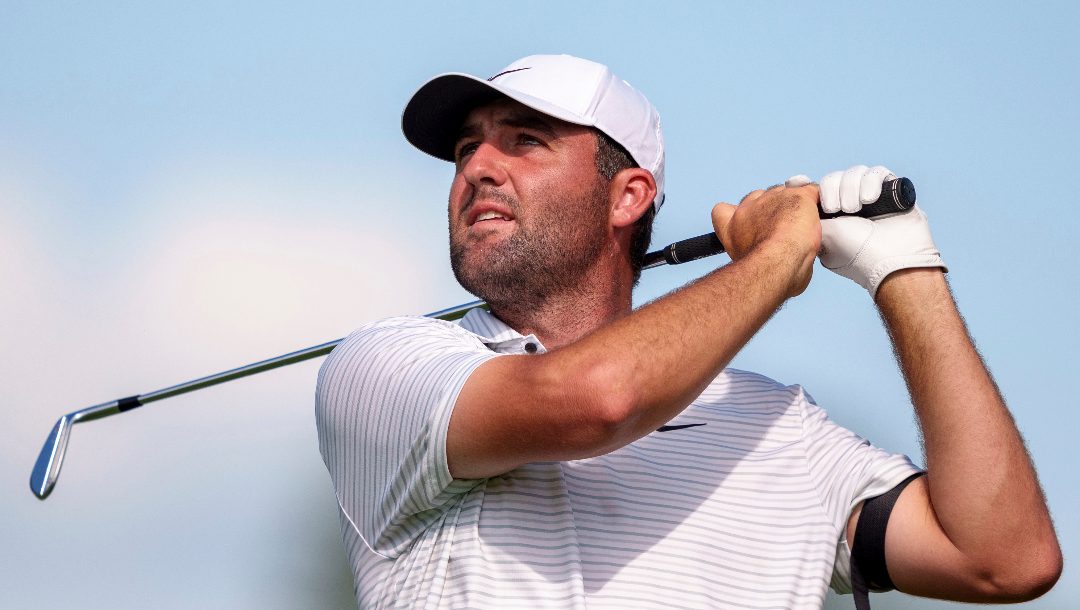
The last six majors have been captured by Scottie Scheffler (twice), Xander Schauffele (twice), Bryson DeChambeau and Rory McIlroy, four of the game’s most elite players, if not the absolute best. Their pre-tournament odds have ranged from 4/1 to 20/1, with the average hovering right around 10/1.
Most notably, there isn’t a longshot outlier in the bunch.
Not that we’re too far removed from a couple of ‘em. Wyndham Clark and Brian Harman both won from triple-digit prices two years ago, though at 32nd and 26th on the Official World Golf Ranking, respectively, they were hardly surprises like those listed above.
In fact, if we consider that Jimmy Walker and Danny Willett were in their primes back in 2016, there hasn’t been an off-the-radar major champion in the past decade, unless we count Phil Mickelson, whose age and massive odds were offset by the fact that he’d won five major titles already.
That’s a stark contrast from the previous generation. We can make the case that during the first 10 years of this century, there were at least a half-dozen such players who “shocked the world” – and that was during the Prime Tiger Woods era.
All of which should cultivate some weighty questions.

U.S. Open Odds Boost
You could earn a bigger potential payout when betting on U.S. Open odds this week!
Check your account today for a Token.
Is there such significant separation between the uppermost echelon and everyone else right now?
What is it about these setups which has allowed the cream to rise to the top?
Can a journeyman still win a major championship?
And most significantly – and simply:
Why is this happening?
I’ve allowed that last query to rattle around in my head over the past month, though I’m not sure I’m any closer to answering it than when I started.
Here’s the laziest explanation (which doesn’t mean it’s incorrect): The best players have continually won the recent majors because – get this! – they’re the best players.
I mean, there’s at least a little something to it. But it doesn’t serve to explain why this hasn’t always been the case unilaterally throughout history and what would have caused it to change.
Then there’s this: With the four majors moved to consecutive months in 2019, there’s now less time for every player to prepare for the specific elements of each one.
“I kind of equate some of the major tests to, like, the majors in tennis you’re playing on a different surface,” Scheffler said Wednesday. “You’ve got grass, clay and then the hard court, and it’s a different style of game. The U.S. Open compared to the Masters is a completely different type of test.”
That’s fair – and completely viable – but again, this isn’t anything new. Moving the PGA Championship to May might’ve streamlined the major season, but it’s tough to suggest that it offered any quantifiable benefits to the best players.
Let’s try this one: If we’re seeking to find what’s changed at the majors in recent years, then it would be advisable to consider what’s changed in professional golf. I’m insinuating, of course, the division between golf’s entities, specifically the PGA Tour and LIV Golf.
While the negatives of failing to have all the game’s top players competing against each other on a regular basis have been magnified, one of the lone positives is that it’s brought even more relevance to the majors. As each tour is flooded with shortened-field, free-money events, the four biggest tournaments have taken on greater importance – especially for the biggest names, perhaps more determined than ever to bring their best stuff to the brightest spotlight.
Whatever the case – and maybe it’s more pattern than trend – don’t expect it to stop this week. On one of the world’s most difficult tests of golf, it only makes sense that the best players will once again be identified.

The content provided in this blog is intended for entertainment purposes only. All views and opinions expressed are the authors and reflect their individual perspectives on sports, betting, and related topics. This content should not be considered professional betting advice or the official views of BetMGM LLC. Please gamble responsibly. If you or someone you know is experiencing issues related to gambling, seek help from a licensed health professional. This blog is not liable for any losses, damages, or consequences resulting from betting activities.