






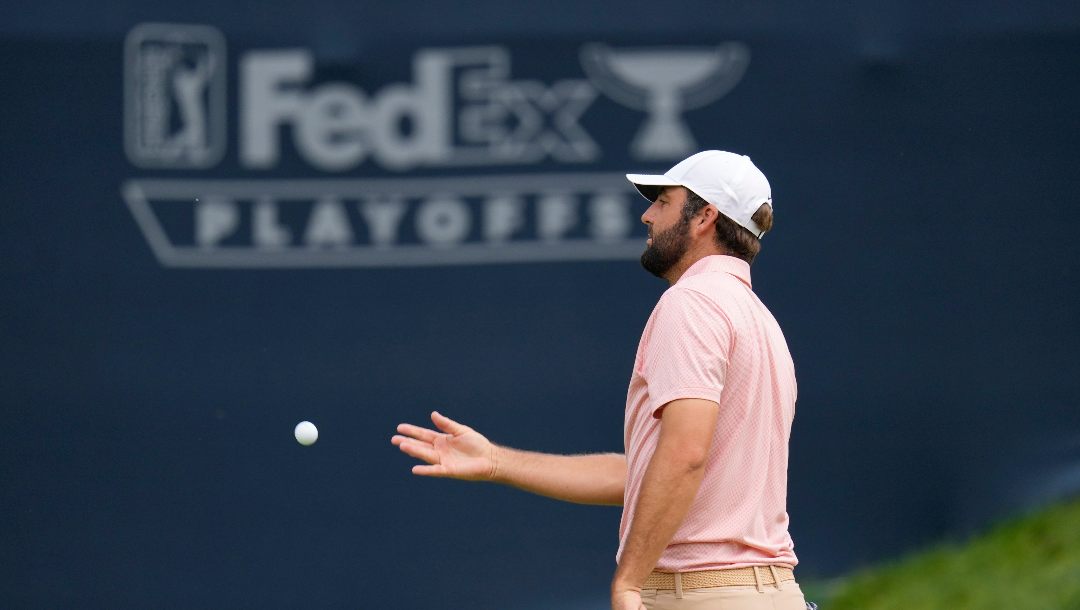
This has been referred to as a “bridge year” for the FedEx Cup playoffs, as it wasn’t until midseason that the staggered scoring format for the Tour Championship finale was scrapped in favor of a more traditional low 72-hole total to determine the overall winner.
There are already plenty of hints and suggestions that this is merely a temporary solution until a permanent fix is announced, but it leads to a question we’ve been asking for close to two decades now.
What is the best way to determine a champion?
Part of the problem here is that the FedEx Cup has never been given a true definition by the PGA Tour. Is it a season-long race which should reward the best player over an eight-month period? Is it a playoff sprint which should offer the same volatility as other sports’ postseasons? Some combination of the two?
It’s difficult to answer the question as to how a champion should be determined if we first can’t answer the questions about what it all means.
The other elephant in this room is that the priorities of each entity invested in the product are different – and the PGA Tour is essentially trying to serve these parties by offering an option which at least placates all of them, even if it doesn’t excite any of them.
“You’re trying to balance a lot of different things,” Rory McIlroy explained last week. “You’re trying to balance the competitive integrity of what the playoffs are, but you’re also trying to keep the media rights partners happy, you’re trying to keep the sponsors happy. They’re the people that are paying the big bucks to expect the big names to be playing in their golf tournaments, and that’s a delicate balance.”
That’s a point I’ve personally been making for the better part of the past two decades, only not as eloquently nor succinctly as McIlroy, who summarized this issue to perfection.
There doesn’t appear to be a perfect solution, even if it sounds like more changes are on the horizon next year. Whether the PGA Tour continues to placate players, fans, media partners and sponsors or chooses to appease one over the others remains to be seen.
6 Options for FedEx Cup Playoffs in 2026 And Beyond
Match Play
I’ve long filed this idea under the category of “Careful What You Wish For.” I get the sense that if fans were polled for their preference, this might get the highest vote total. The general notion is that golfers love the match play format – it’s what we play when we square off against a buddy, it’s always brilliant theater on Sunday at the Ryder Cup and the lone match play event no longer exists on the schedule, so there’s a market for it. That is, of course, until Jacob Bridgeman and Akshay Bhatia catch fire for a few days and the final match turns into a ratings – and rewards – disaster.
Let’s face it: We want match play, but we want match play to be Scottie Scheffler against Rory McIlroy and we want it to be compelling and intense and we want it to come down to one of ‘em making a 30-footer on the final hole to win. We’d all love that scenario, but the reality is that watching two guys playing golf against each other for four hours on the eve of football season probably isn’t going to be as attractive a possibility as you’d think. I’ve always said that match play is essentially the inverted pyramid – to borrow a journalism term – of golf, where the early rounds offer more intrigue than the later ones, as the tournament overall becomes less interesting as it continues. The bigger issue here is that according to reports, the PGA Tour’s best players have been against this idea, even if the longstanding idea that the TV networks wouldn’t like it might not be as much of a factor. Perhaps the next option would be more amenable for all parties…
Stroke Play and Match Play
The U.S. Amateur was contested this past week, as the entire field played 36 holes of medal play at Olympic Club, then the top-64 were seeded and played match play until a winner was determined. It could be a blueprint to the Tour Championship. The general feeling is that this format would at least weed out the players who really didn’t have their best stuff, perhaps helping the notion that the PGA Tour needs some of its biggest stars to be present on the weekend of its end-of-season championship.
If they really wanted to make that assurance, the field could remain 30 players, with the top-16 in stroke play moving on to the match play portion of the event; if they wanted to push that narrative even more, it could somehow become a double-elimination format, more likely ensuring that the Scotties and Rorys would still be around on the weekend. There are plenty of reasons this idea would be more acceptable to more of the entities for which the PGA Tour is trying to strike that elusive balance.
Stroke Play Only
I opened this column by suggesting that further changes are coming to the FedEx Cup next year and beyond, but there’s a non-zero chance that this week is determined a rousing success and without a better idea, the PGA Tour simply keeps the Tour Championship as a 30-man event with every player starting at even-par. This format probably would’ve gone over better some 15-20 years ago, when we weren’t already inundated with short-field, no-cut, free-money events where the best of the best were competing only against each other. In the current environment, though, these types of tournaments are being contested at a rate of more than once each month, making this one feel all too familiar and not nearly as special as it was in the previous generation. If anything, the season finale needs to stand out. This format doesn’t, but again, there’s at least a chance it might be the lesser of all evils and stick around for a while.
Staggered Scoring
The amount of people I’ve heard from on social media just in the early part of this week who are bemoaning this switch from the previous staggered scoring format is, well, staggering. I’ll be honest: I didn’t think anyone liked the idea of what was essentially a reverse-net event, where the best players are given a head start over everyone else. After all, even Scheffler didn’t like this configuration and he was the greatest beneficiary of it. For the PGA Tour to scrap this one midseason tells us everything we need to know about how it had been received. It would be a shock if it somehow came back – even in an amended form. Yes, even a bigger shock than those who are currently lamenting the fact that it’s gone.
Cumulative Scoring
This is an idea which has been tossed around for a while now, but isn’t without inherent problems. The basic premise is that the top-50 (or whatever that number might be) at the FedEx St. Jude Championship would move on to the BMW Championship, but keep their scores intact, then the top-30 (or so) cumulative totals would advance to the Tour Championship, where the lowest total through all three events would be deemed the champion.
Using the current year as an example, Scheffler would start this week at 30-under, Tommy Fleetwood would be second at 25-under and nobody else would be inside 20-under. This feels like the staggered scoring start on steroids. Sure, maybe it just proves how much better Scottie has been and shows why he shouldn’t have to sweat winning the overall title, but all of the air would be taken out of this balloon, with any drama potentially over before it started. Even more incongruent in this format would be when the BMW sees outlier scoring totals. In 2020, the winner was 4-under; the next year, the winner was 27-under. These scenarios would’ve left players rewarded either too handsomely or not nearly enough, based solely on the scoring conditions.
Two Separate Winners
There’s a great photo from the aftermath of the 2009 Tour Championship, as Tiger Woods holds the FedEx Cup trophy aloft while standing next to Phil Mickelson, who’s hoisting the Tour Championship hardware. If it was awkward for them, it was even more awkward for the PGA Tour, which was forced to dish out explanations as to how one player could win the season-long title and another could win the tournament. This format was confusing to fans and marginalized by players. In 2017, for instance, Justin Thomas finished runner-up in the event, but earned enough points to claim the FedEx Cup title, then punctuated it in his post-round press conference by explaining, “I was upset. I felt like I had a great chance to win this tournament and I didn’t.” That wasn’t the kind of rhetoric the PGA Tour wanted from its overall champion.
Here’s the postscript to all of these potential options: As you can see, there is no perfect scenario, which is exactly why the PGA Tour continues to tinker close to two decades into the FedEx Cup era.
I will, though, offer a contrasting opinion to those who believe that without a perfect conclusion, the playoffs are insignificant and unnecessary.
Back in 2006 – the final year before the FedEx Cup was implemented – the Tour Championship was held during Week 9 of the NFL season. Tiger and Phil didn’t show up. Adam Scott claimed the title to little fanfare. Instead of a boom to end things, the season essentially vaporized into the ether.
The alternative now is that we have three consecutive weeks of the PGA Tour’s best players competing against each other, leading right into – but not stepping onto – football season. For all the grousing about formats and standings and points, three interesting tournaments to conclude the campaign is inherently a much better option than that of the previous era.

The BetMGM online sportsbook is the premier destination for weekly PGA Tour odds and more golf betting opportunities throughout the season.
From futures odds for The Masters or U.S. Open to parlays and prop bets, there’s non-stop excitement for everyone. And with BetMGM promos for existing users, sometimes you can lock in a bigger potential payout with a sportsbook Odds Boost or Multi-Sport Parlay Boost.
If you don’t have a sportsbook account, sign up for a new account with a sportsbook welcome offer.
The content provided in this blog is intended for entertainment purposes only. All views and opinions expressed are the authors and reflect their individual perspectives on sports, betting, and related topics. This content should not be considered professional betting advice or the official views of BetMGM LLC. Please gamble responsibly. If you or someone you know is experiencing issues related to gambling, seek help from a licensed health professional. This blog is not liable for any losses, damages, or consequences resulting from betting activities.